Thai amulets: why you don’t “buy” them
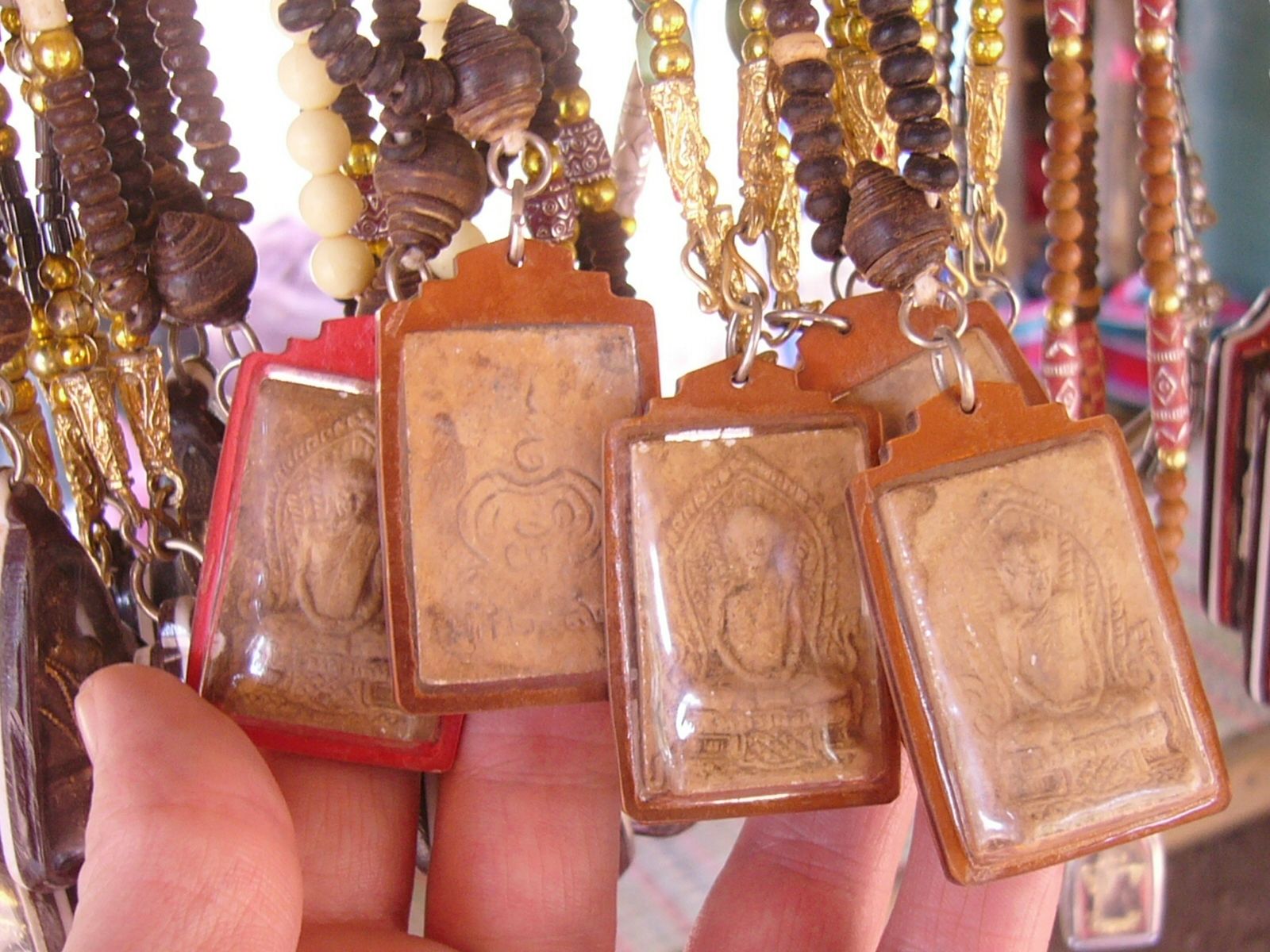
Look around you: on the taxi driver’s neck, on the songthaew dashboard, behind the restaurant till. These small images of the Buddha or of revered monks, often protected by a transparent case, are everywhere — and they are not jewellery. In Thai they are called phra khrueang, and they occupy a place few visitors suspect: between faith, protection, and a collectors’ market worthy of ancient art.
What they really are
An amulet is a small sacred effigy — most often made of clay, metal, or compressed powders that may contain dried flowers, herbs, sometimes fragments of monks’ robes. They are made in monasteries and blessed by monks during ceremonies that can last several days. Each shape has its name and its specialty: the rectangular Phra Somdej, often described as the most prestigious, the Phra Pidta with covered eyes, the takrut, a small metal scroll engraved with mantras…
Their role, for those who believe: to protect — from accidents, bad luck, evil spirits — and to attract luck or prosperity. It is a whole side of Thai popular Buddhism, where doctrine and protective beliefs live side by side without getting in each other’s way.
The detail that says it all: you don’t buy them, you “rent” them
This is the most revealing subtlety. In Thai, you never say “buy” an amulet: you say “rent” (chao). The reason is simple and beautiful: a sacred object cannot belong to anyone. The money you give is not a price, it is a contribution; the amulet only passes from guardian to guardian. If one day a seller or a Thai friend gently corrects you on the word, you will know why.
The amounts vary enormously: a few dozen baht for a simple amulet at the market, and considerable sums for old pieces blessed by famous monks — there are experts who authenticate them with a magnifying glass, like works of art. Needless to say, for a beginner, the “collector” market is a minefield of fakes: you look, you learn, you don’t “rent” anything expensive.
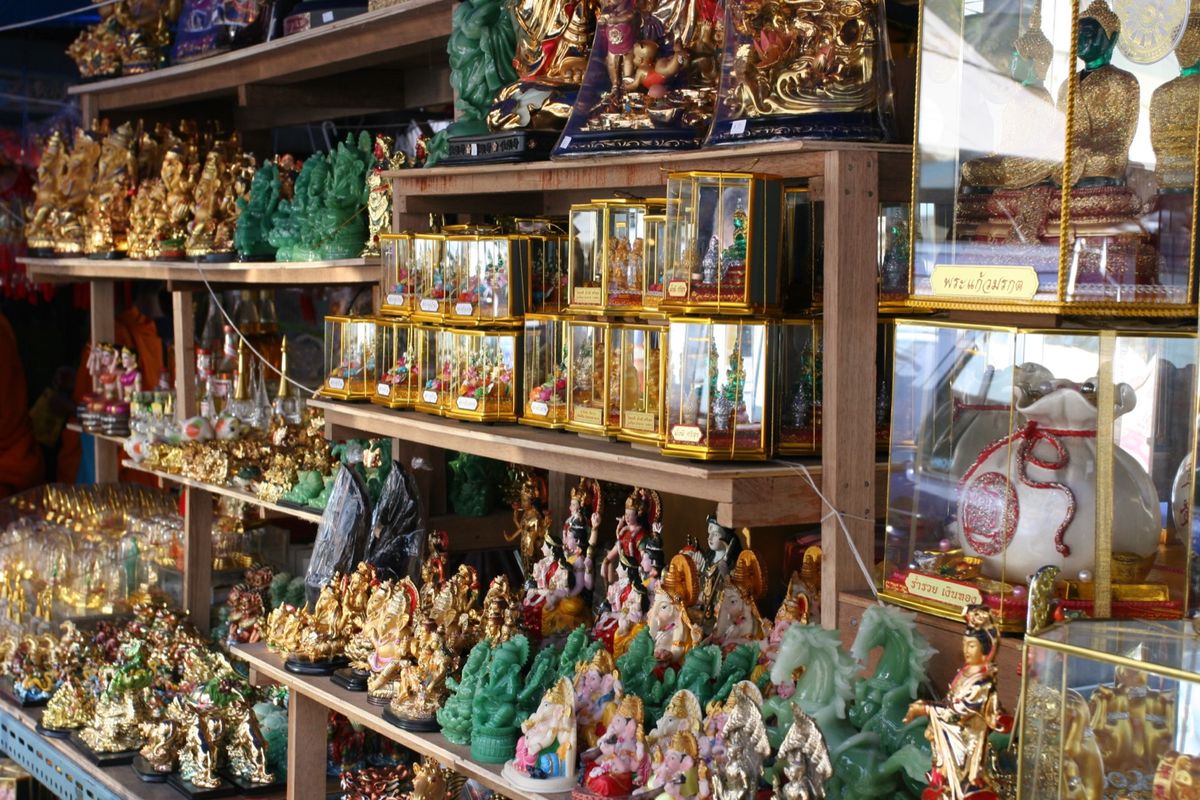

Where to see them
In temples, of course, but also in dedicated markets: in Bangkok, the best known spreads around Wat Mahathat, near the river (the Tha Prachan district), and other stalls live near Wat Ratchanadda. You will cross collectors armed with magnifying glasses, monks, curious visitors — it is a visit worth any museum, and it is free.
If you wear one: the customs
- Above the waist, always. An image of the Buddha is worn high — around the neck, never in a trouser pocket.
- Never on the floor, never on the bed. Practising owners give it a dedicated place, up high.
- Clean hands before handling it — a mark of respect reported by wearers themselves.
- Many Thais wear an odd number — one, three, five — according to common usage.
- And the golden rule for a foreigner: wearing one is well seen if done with respect. Treating it as a kitsch souvenir, much less so.
- Tricycle — The Buddhist Review — the “renting” of sacred objects and the economy of merit
- Amulet City (FAQ) — the wearing and respect customs reported by wearers
- Thailand Sun — the types of amulets, their making and the market
Your cockpit for life in Asia
PilotAsia tracks your stay, calculates your deadlines (exit date, 90-day report, TDAC) and your budget in baht when your income lives elsewhere. Free, no ads, no data resale.
Discover the app Also on Google Play · and the free PDF guide.